Mrs Belgium, who we recently did a smile makeover on, has included some of our information on her blog, talking about “Sleapless in Seattle”. If you can read Flemish, you might find this interesting…!

http://sekadobric.com/

or more specifically, http://www.sekadobric.com/pages/sleapless-in-seattle.php

Gum disease linked with gestational diabetes risk

NEW YORK (Reuters Health) - Pregnant women with gum disease may be more likely to develop gestational diabetes than those with healthy gums, researchers have found.

Gestational diabetes arises during pregnancy and usually resolves after the baby is born, but it can raise a woman’s risk of developing type 2 diabetes later on. It can also contribute to problems during pregnancy and delivery, including maternal high blood pressure and a larger-than-normal baby, which may necessitate a cesarean section.

The new findings, published in the Journal of Dental Research, suggest that gum disease may be a treatable risk factor for gestational diabetes.

Among pregnant women researchers followed, the 8 percent who developed gestational diabetes had higher levels of gum-disease-causing bacteria and inflammation.

Gum disease can trigger an inflammatory response not only in the gums, but throughout the body. It’s possible that such inflammation may exacerbate any pregnancy-related impairment in blood sugar control, contributing to gestational diabetes in some women, the researchers speculate.

Past studies have also linked gum disease to a higher risk of premature birth, with one theory being that systemic inflammation is involved.

Of the 265 women in the study, 83 percent were Hispanic, a group that is at higher-than-average risk of both gestational diabetes and type 2 diabetes. The women who developed gestational diabetes were also significantly more likely to be heavier before they became pregnant, have had gestational diabetes before, and higher C reactive protein levels, a marker for inflammation and cardiovascular disease.

“In addition to its potential role in preterm delivery, evidence that gum disease may also contribute to gestational diabetes suggests that women should see a dentist if they plan to get pregnant, and after becoming pregnant,” Dr. Ananda P. Dasanayake, the lead researcher on the study, said in a statement.

“Treating gum disease during pregnancy has been shown to be safe and effective in improving women’s oral health and minimizing potential risks,” added Dasanayake, a professor at the New York University College of Dentistry.

Future studies, Dasanayake noted, should investigate the link between gum disease and gestational diabetes in other high-risk groups, such as Asian and Native American women.

SOURCE: Journal of Dental Research, April 2008.

I recently had the opportunity to treat a pageant contestant from Belgium. The press there have followed her story, and I thought I would share some of the online links she sent me. If any of you speak Flemish, tell me what it says!

http://www.zita.be/entertainment/nieuws/73986_misses-belgium-globe-trekt-naar-amerika-voor-smileover.html

http://entertainment.be.msn.com/showbizz/article.aspx?cp-documentid=8940083

Met vriendelijke groet,

Seka Dobric

Misses belgium Globe 2008

The debate about the safety of mercury containing fillings has gone on for well over 100 years. I won’t try to change anyone’s mind, but I suggest a little homework to become familiar with the issues. Amalgam has many rules for use. Since it is created by mixing mercury with materials to create something that is 50% mercury, it must be handled correctly. The simple placement of amalgam produces scraps that are required to be collected and placed in a special container and then be removed by a “Haz-Mat” service. Offices are required to have waste water lines run through a filter system to trap scrap mercury, costing offices thousands of dollars. It is a material that is NOT offered in my office, as I believe the alternatives make the choice obvious.
Recently, the FDA has chosen to reclassify amalgams, and this may change current feelings and views within the industry. It is not a ban, at least not at this point, but it should help people better understand.

FDA revises its position on dental amalgams

6/5/2008
By: Kathy Kincade

The FDA this week settled a lawsuit that sought to have mercury fillings banned from the U.S. market. While not agreeing to a ban, the agency has agreed to add warnings regarding the use of amalgams in some patient groups, and to complete a review that could lead to more stringent regulation of the substance.

“Dental amalgams contain mercury, which may have neurotoxic effects on the nervous systems of developing children and fetuses,” the agency now states on its Web site. “Pregnant women and persons who may have a health condition that makes them more sensitive to mercury exposure, including individuals with existing high levels of mercury bioburden, should not avoid seeking dental care, but should discuss options with their health practitioner.”

As part of the settlement with Moms Against Mercury, Consumers for Dental Choice, and the other plaintiffs who filed the lawsuit against the FDA last December, the agency is now required to formally classify dental amalgam by July 2009, according to Peper Long, FDA spokesperson. In its 2002 proposed rule on dental amalgam, the agency proposed to classify it as a Category II device.

“Now that we are going to put this into a class, we will be able to put regulations in place that are more specific to dental amalgam,” she said.

The agency has struggled for years to reach a definitive conclusion about amalgam fillings. In 2004 an FDA panel determined that there was no evidence of risk from dental amalgam — even to pregnant women. But a 2006 committee disagreed. Even so, prior to the settlement of this lawsuit, the language on the FDA Web site regarding the safety of dental amalgams was less direct, noting only that “the possibility that dental amalgam could pose health risks that are not yet scientifically known.” In addition, regarding potential health risks of mercury for pregnant women, the Web site previously stated: “The recent advisory panel believed that there was not enough information to answer this question.”

In a letter posted June 3 on the Consumers for Dental Choice Web site, Charles G. Brown, an attorney for the consumer group, declared, “We have won our ten-year battle to get the Food and Drug Administration to comply with the law and set a date to classify mercury amalgam. The impact of the re-writing of its position on amalgam can hardly be understated.”

The ADA said in a formal statement issued June 4 that the FDA settlement with Moms Against Mercury “in no way changes the federal agency’s approach to or position on dental amalgam. The ’settlement’ only affirms that the FDA will do what it has intended doing all along. In the settlement, the FDA agrees to complete the classification process of dental amalgam by July 28, 2009. The ADA has supported the proposed reclassification since the agency first proposed it in 2002 and continues to support it.”

Currently, the FDA has different classifications for encapsulated amalgam and its component parts, dental mercury and amalgam alloy. “The ADA agrees with the pending proposal from the FDA to place encapsulated amalgam and its components under one classification. Based on extensive studies and scientific reviews of dental amalgam by government and independent organizations worldwide, the ADA believes that it remains a valuable, viable, and safe choice for dental patients,” the organization said in its statement.

In addition to Mothers Against Mercury, plaintiffs in the lawsuit included four nonprofit groups, two public officials, three dental professionals, and two consumer advocates that Brown refers to as “victims.”

While Dr Timmerman is a Seattle Cosmetic Dentist, he also performs general dentistry as well. Often people remark that they thought he only did smiles, but the fact is even regular cleanings and fillings are done here as well. If you would like full service dental care for your whole family, call 206-241-5533!

We haven’t really shared much about this product, but there is quite a bit of interest. If you haven’t heard, there is a product available now that allows a person to improve their smile with a device that literally snaps in place. Snap-on-Smile!

Some have reported that they CAN eat with it in, but many choose not to. Since it doesn’t bond in place, it cannot be considered a permanent solution, but it DOES allow a person to try out a new smile before investing in a more permanent method. It is made out of “plastic” and not porcelain like most smile makeovers are. As time goes on, one should expect the device to wear out, but in the meantime, you know what you can expect from a makeover.

If you would like to know more, or for a free consultation, call us at 206-241-5533.

We often have people want a smile makeover in the most conservative fashion. Dr Timmerman is a Seattle Cosmetic Dentist that does Extreme Tooth Whitening here in Seattle. Also called Deep Bleaching, we have found this to be the most effective way to whiten teeth. More information is on the main page of this website or our “sister” website at www.BestSeattleDentist.com.

Give us a call at 206-241-5533 to learn more or schedule your free consultation!

Somehow, I have been convinced that I should ride my bike a long distance again. What was I thinking?

I will participate in the RAMROD this year, the Ride Around Mount Rainier in One Day. 150 miles, 10,000 feet of elevation. July 31st.

I feel tired just thinking about it…

I came across this information recently and thought it would be nice to share. I don’t have any affiliation to this company and make no money from this, but thought others may benefit.

__________________________________________________________

I am Dr. John Bruinsma, a dentist, and my wife Debra is a dental hygienist. In 1995, we founded Dr. John’s Candies® and are committed to offering the best tasting sugar free candy available to you.

We introduced Dr. John’s Candies® at the American Dental Association Annual Meeting that same year, and soon became the best selling sugar free candy offered to dentists in the United States.

For over twenty five years, our confectioner has continued a family tradition of making “gourmet” sugar free candies. Together, we create blends that you will not find anywhere else, using only the finest flavorings and ingredients.

Recently, Dr. John’s Candies® has introduced new and enhanced flavors, swirls, shapes, customized candy wrappers, and packaging. Also, our orange flavored “Herbal Lollipop” is a very exciting breakthrough in the field of dentistry. UCLA dental researchers have isolated an herb from the Chinese licorice root that we add to our sugar free candy formula, which has scientifically demonstrated effectiveness to disable the primary bacteria that causes decay. Learn more about our cavity-fighting Herbal Lollipop.

Whether you are a diabetic, an individual shopping for healthier treats for you and your family, a dental or medical professional, or a business desiring to portray a healthy image, Dr. John’s Candies® will fulfill your need.

Our customers are very loyal and most of them have heard about us through “word of mouth.” They continually comment, “You can’t even tell it’s sugar free!” I guess that says it all.

Since you will probably not find Dr. John’s Candies® in your neighborhood supermarket or pharmacy, we are working to make it convenient and affordable for you to order directly through catalogs and online.

Try Dr. John’s Candies for yourself and see why we say…

“Get the Taste of a Healthier Lifestyle”™
Contact Dr. John’s Candies at (616) 454-3707 or info@drjohns.com

March 6, 2008
Skin Deep
My Root Canal? It’s a Blur
By SARAH KERSHAW
A MAN in a mask is wielding a drill that is so loud it makes you feel as if a bulldozer is plowing through your head.

A tube inside your cheek is vacuuming saliva. Water is sprayed across your teeth, and you are alternately gagging and having the strong sensation of drowning. The man is coming closer to your face with a needle that looks a lot like a sword from where you sit and, when inserted into your tender gums, will leave half your face paralyzed for hours.

What if you could forget you ever went to the dentist? What if the mask, the drill and the needle were mere blips in an incoherent dream and you could erase those images from your consciousness, something like an eternal sunshine of the spotless mouth?

And what if you were a dentist and could charge several hundred dollars for the promise of this glorious amnesia, tapping into a vast market of untreated patients hiding for years — their cavities unfilled, their crowns in disrepair, their gums a mess.

Enter relaxation dentistry, an appealing concept for the large number of people who dread and avoid the dentist. It is a fast-growing, hotly debated niche in the dental world that involves sedating adult patients with antianxiety drugs and sleeping pills for everything from routine cleanings and fillings to multiple root canals.

In the last five years, thousands of dentists have been trained to administer drugs to anxious patients using medications that doctors say create a mild amnesia for patients who are awake, but not necessarily alert, and may forget the whole experience or have only vague recollections.

But the practice has drawn mounting criticism from doctors and dentists who say it poses a dangerous risk of patients being oversedated by dentists who often have completed only a 24-hour training course and are not equipped to safely monitor the drugs.

Dentists and other medical professionals say the growth in relaxation dentistry is being driven by consumers’ increasing ease in using medications for everything from depression to erectile dysfunction and also by advances in sedation that mean patients can return to normal activities within a few hours of being medicated.

“Its been a big, big plus for millions of people who otherwise would have neglected their dental health, which in turn affects their overall health,” said Dr. Michael D. Silverman, a dentist who in 2000 founded the Dental Organization for Conscious Sedation, which offers 24-hour training courses, has more than 8,000 dentists as members and has spearheaded much of the marketing for oral sedation.

After warning that the rising use of oral sedation was not being adequately regulated, the American Dental Association published guidelines last year recommending that dentists undergo a minimum of 24 hours of training in sedating patients and 10 clinical experiences administering the medications, including three actual cases and one that involves bringing a patient back from deep sedation. The remaining cases can be simulated or watched on videotape.

Forty states, responding to reports of oversedation and other safety concerns, have either adopted those guidelines, developed their own that are more or less stringent, or are considering new regulations.

“There are absolute dental-phobes who stay away, even to the point of trying to take their teeth out with pliers,” said Dr. Joel M. Weaver, a spokesman for the dental association and an emeritus professor at the College of Dentistry at Ohio State University. “Now dentistry has a real way to treat them. But we want to be able to treat them safely.”

To bring the anxious patients out from their foxholes, a growing number of dentists have been marketing relaxation dentistry, or “oral conscious sedation” as it is also known, through television, newspaper and Internet advertisements, with enormous response.

Karen O’Hanley, 45, from Quincy, Mass., was so afraid of the dentist that she avoided the chair for four years, trying to scrape the plaque and stains off her teeth with tweezers.

“I was terrified, I was absolutely petrified,” said Ms. O’Hanley, describing anxiety-ridden visits to the dentist during which she sweated profusely. But last year, Ms. O’Hanley experienced relaxation dentistry, after hearing about it in a television advertisement. The procedure typically combines Valium and a sleeping pill sold under the brand name Halcyon.

She said she had no memory of getting three filings, a root canal, a bridge and a crown during one appointment.

The Valium is typically given the night before the appointment, while the sleeping pill is taken about an hour before the appointment. Adjustments are then made based on the patient’s response.

Dental appointments that involve oral sedation can take longer — on average about an hour, dentists say — because if the patient is not comfortable or adequately sedated, the dentist may administer more medication. But dentists who use the sedation say that patients could ultimately save time because they can get more work done in one appointment.

Now that Ms. O’Hanley has had one side of her mouth fixed last year, she said she would be willing to go back. She had no problem with the $400 her dentist charged for the sedation, on top of a $7,000 dental bill, only $1,500 of it covered by insurance.

“I don’t remember the needles, the gagging, the water,” she said “I certainly don’t remember being in the chair for five hours.”

Anesthesiologists say that the drugs used for sedation typically cause patients to lose some memory, even though they are conscious during the procedure. But memory loss is not guaranteed and it varies by patient depending on the dosages.

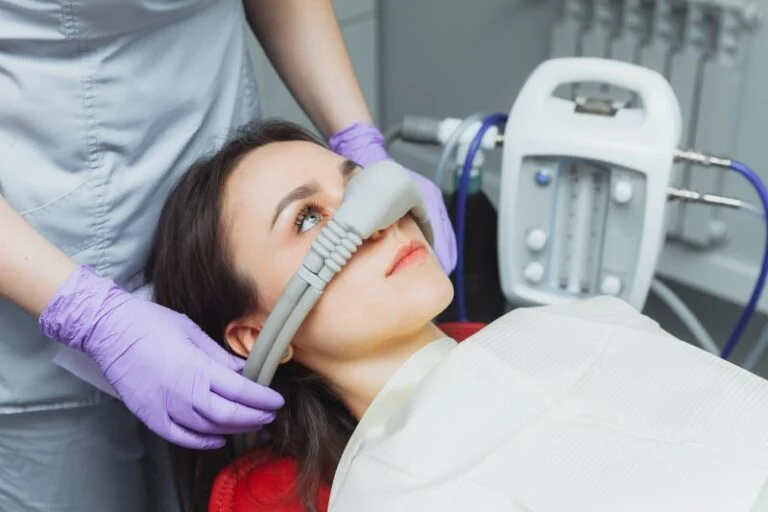
The side effects — drowsiness and fogginess — are considered moderate compared with the effects of undergoing general anesthesia, which is typically used for oral surgery and complicated procedures. But patients are told that they must be driven to and from the dental appointment if they are under sedation. The medications are also more potent in treating anxiety than nitrous oxide, or laughing gas, which is often used by dentists but is much shorter-acting, doctors say.

Many dentists can administer antianxiety drugs intravenously, a procedure that is often covered by insurance, dentists say, but that typically requires more training than oral sedation; the dental association guidelines recommend 60 hours of training and experience with 20 patient cases.

Some dentists say oral sedation is a dangerous trend that, if unchecked, could lead to serious risk for patients. The critics say that intravenous sedation is much more precise and therefore safer because pills take longer to absorb into the bloodstream, and dentists may keep giving more without knowing the full impact.

Dentists who practice oral sedation can use another medication, Flumazinil, which effectively reverses the sedative effects of the Valium and Halcyon in a relatively short period, doctors say, if they find a patient is oversedated.

Still, oral surgeons and dental anesthesiologists typically complete months or years of training in sedating patients, and many say the growing use of sedation by general dentists, who are not required to have advanced training in anesthesiology, is disconcerting.

“They are saying it’s no different than someone taking a sleeping pill before bed or popping a Valium if they are nervous, but these circumstances are different,” said Dr. Robert S. Glickman, chairman of the oral and maxillofacial surgery department at the College of Dentistry at New York University. “There is a lack of ability to evaluate the effect, to monitor it and a lack of ability to manage emergencies should they arise, and most people just do not have the experience in dealing with complications.”

Deborah Gorman-Sprague, who two weeks ago was sedated for a root canal, a crown and a surgical implant, said she had no safety concerns when her dentist, Dr. Robert Emami, suggested oral sedation. Her primary doctor, treating her for diabetes and high blood pressure, had given her the green light, she said.

Ms. Gorman-Sprague, 55, who lives in Randolph, Mass., surfed the Internet looking for dentists who offer a less painful experience, after suffering through implants that she said terrorized her and left her face swollen and black and blue. She chose Dr. Emami because he offered sedation.

“I felt like it couldn’t be worse than what I’ve been through,” she said. “I’ve been through so much pain. I feel like now dentists have finally caught up with today. It was like the dark ages before.”

Next Page »