
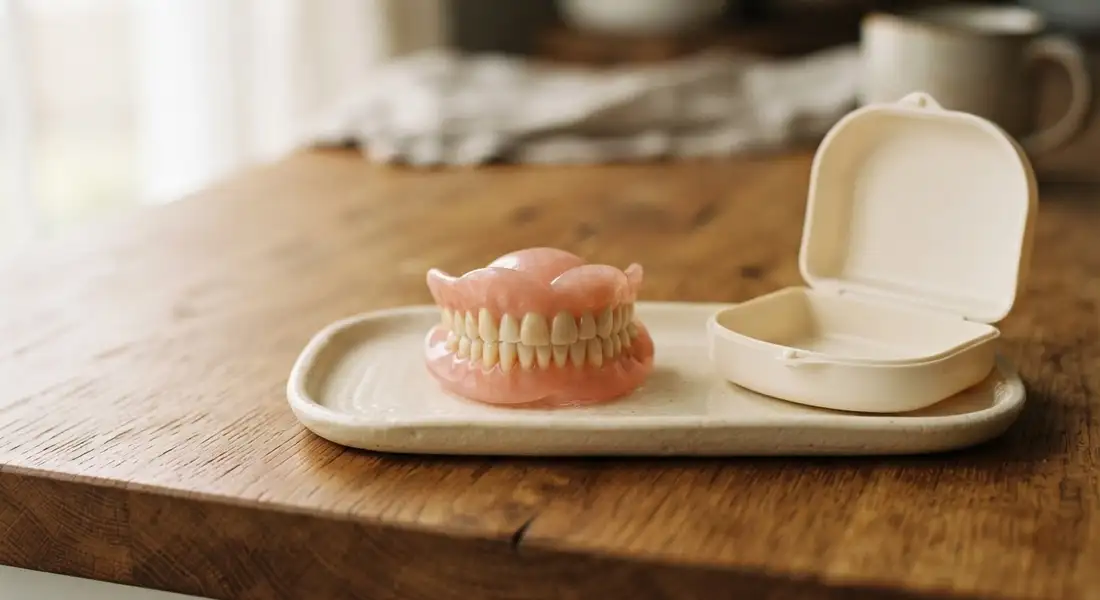
Quick answer: A traditional complete denture sits on your gums and comes out for cleaning and at night. Full-arch implant teeth are attached to dental implants placed in the jaw, so they are supported by the implants rather than the gums alone. The FDA lists restoring the ability to chew and helping keep the jawbone from shrinking among the benefits of implants, and it also lists real surgical risks. Which one fits you depends on your health, your bone and your goals, and that is a conversation to have with a dentist who has examined you.
Who is this comparison for?
Losing all of the teeth in an arch is more common than many people think. The National Institute of Dental and Craniofacial Research (NIDCR) reports that about 15% of seniors 65 and older have no remaining natural teeth. Many people in that situation start with complete dentures. Some later ask whether implants would change daily life.
At South Seattle Smiles in Tukwila, Dr. Lance Timmerman sees both groups: people who have worn dentures for years and people facing the loss of their remaining teeth. This guide explains the differences in plain terms. It is general information, not a treatment plan.
How does a traditional denture stay in place?
MedlinePlus, the National Library of Medicine’s health site, describes dentures as false teeth made to replace teeth you have lost. Complete dentures cover your entire upper or lower jaw, while partials replace one or a few teeth.
A complete denture relies on its fit against the gums. MedlinePlus notes that dentures may feel strange at first, that speaking and eating may feel different, and that wearing them can make it harder to feel hot foods and liquids. If dentures move too much, denture adhesive may help. MedlinePlus also says your mouth changes over time, so dentures may need to be adjusted or replaced.
If you are weighing this route, the practice’s dentures and partials page explains what Dr. Timmerman offers.
How are full-arch implant teeth different?
The FDA describes dental implants as medical devices surgically placed in the jaw to restore a person’s ability to chew or their appearance. They support artificial teeth such as crowns, bridges or dentures. Each implant system has an implant body placed in the jawbone in place of the tooth’s root, plus an abutment that extends through the gums to support the teeth.
With a full-arch approach, a set of implants supports a whole arch of teeth. South Seattle Smiles offers All-on-4 dental implants, which use a small number of implants to support a full arch, as well as implant-supported dentures. MedlinePlus notes that when dentures move too much, a dentist may suggest switching to dental implants, which replace both the roots and the teeth.
What changes day to day?
The table below compares the two in everyday terms. It is a general guide; your own plan may differ.
| Daily life | Traditional complete denture | Full-arch implant teeth |
|---|---|---|
| What holds the teeth | Fit against the gums, sometimes adhesive | Dental implants placed in the jaw |
| Nights | MedlinePlus advises taking dentures out at night | Depends on the design; fixed teeth stay in, removable implant dentures come out |
| Cleaning | Brush the denture daily with a denture care product | Clean the implants and surrounding gums as your dentist instructs |
| Bone | Tooth loss can lead to bone loss | The FDA lists helping keep the jawbone from shrinking as a benefit |
| Upkeep | Adjustments or replacement as the mouth changes | Regular dental visits; tell your dentist right away if an implant feels loose or painful |
| Getting there | No surgery | Surgery and a healing period that may take several months or longer |
What does the FDA say about benefits and risks?
The FDA’s patient page lists these benefits of dental implant systems: restoring the ability to chew, restoring cosmetic appearance, helping keep the jawbone from shrinking due to bone loss, preserving the health of surrounding bone and gums, and helping keep nearby teeth stable.
It is just as direct about risks. These include injury to surrounding tissues during surgery, a bite that does not feel normal, an abutment screw loosening, and implant failure. The FDA says failure may be more likely with uncontrolled diabetes or in people who smoke, and can also come from infection in the bone and gums around the implant. Our guide to smoking, diabetes and implant healing covers that in more detail.
The FDA also notes that when a tooth is lost, a person can experience rapid bone loss, speech problems or changes to chewing. Our article on bone loss after missing teeth explains why bone matters so much for implants.
How long does the implant process take?
The FDA says the healing process for the implant body may take several months or longer. During that time you typically have a temporary in place. Full-arch treatment has more steps than a single tooth: an evaluation, sometimes extractions or bone grafting, implant placement, healing and the final teeth.
Dr. Timmerman is a Fellow of the International Congress of Oral Implantologists and places implants in-house at the Tukwila office. The practice’s free dental implant consultation includes a CBCT scan, an intraoral scan and a customized treatment plan, so you can see your options before deciding anything.
How do I know which option suits me?
Start with your health and your mouth, not the product. The FDA recommends talking to your dental provider about benefits, risks and whether you are a candidate, and notes that overall health affects healing and how long an implant may stay in place. Our article Are you a candidate for dental implants? walks through the questions to bring.
Some people choose dentures first and revisit implants later. Others prefer to plan implants from the start. Both are reasonable starting points.
Next step
If you live in Tukwila, Renton or South Seattle and want to compare options for your own mouth, you can request a consultation or call South Seattle Smiles at (206) 241-5533. Bring your questions, a list of your medications and any notes about your current dentures.